
Wellness
Vitamins and supplements Latino families ask us about the most
Every week we get asked about vitamins, supplements, and natural products — what's worth it, what's not, and how to mix them with prescription medications safely. Here are the most common questions, answered without the marketing.

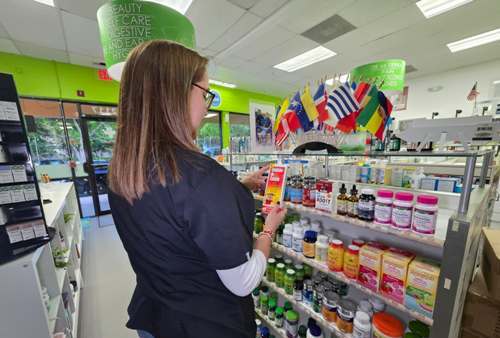
Walk down the vitamins aisle at any pharmacy and you'll see hundreds of bottles, dozens of brands, and claims that promise everything from "boosted immunity" to "natural energy." Most of it is marketing. Some of it is genuinely useful. A few combinations can hurt you.
Here are the questions our pharmacists hear most often, with the answers we give at the counter — no marketing, no upselling, just what's actually worth your money.
Vitamin D — the #1 supplement question we hear
"Doc, my doctor said I'm low in vitamin D. How much should I take?"
This is the most common supplement conversation we have. Despite living in sunny Florida, most adults — especially adults with darker skin, who wear sunscreen, or who work indoors — are deficient.
What we usually recommend: 1,000 to 2,000 IU per day for adults with no diagnosed deficiency. If your doctor diagnosed a deficiency, they may prescribe 50,000 IU once a week for 8–12 weeks, followed by a maintenance dose.
What to watch for: Vitamin D is fat-soluble, which means you can overdo it. Taking 10,000+ IU per day for months can cause calcium buildup. Get a blood test (25-hydroxy vitamin D) before going above 2,000 IU/day long-term.
Vitamin B12 — especially for older adults and metformin users
Vitamin B12 deficiency causes fatigue, brain fog, and tingling in the hands and feet. Two groups are particularly at risk:
- Adults over 60 — stomach acid decreases with age, which reduces B12 absorption from food
- People on metformin (the most common diabetes medication) — long-term metformin use depletes B12
What we recommend: A sublingual (under-the-tongue) B12 tablet, 500–1,000 mcg per day. Sublingual absorbs better than swallowed for older adults. If a blood test shows you're severely deficient, your doctor may recommend B12 injections instead.
Omega-3 (fish oil) — useful, but pick the right one
Omega-3 fatty acids support heart and brain health and reduce inflammation. The catch: the supplement aisle is full of fish oil with widely varying purity and dosage.
What to look for on the label: EPA + DHA combined of at least 1,000 mg per serving. Most bottles brag about "1,000 mg fish oil" — but that's the total oil, not the omega-3. Read the small print.
What we recommend: A high-quality fish oil or krill oil with the EPA+DHA dosage clearly listed. Vegetarians and people who can't tolerate fish oil can use algae-based DHA instead.
Important: Fish oil thins the blood slightly. If you're on warfarin (Coumadin), aspirin, or any blood thinner, talk to us before adding fish oil.
Magnesium — for sleep, muscle cramps, and constipation
Magnesium is one of the most underrated supplements. Different forms do different things:
- Magnesium glycinate — calming, helps with sleep and anxiety
- Magnesium citrate — laxative effect, helpful for constipation
- Magnesium oxide — cheap but poorly absorbed
- Magnesium L-threonate — crosses the blood-brain barrier, used for cognitive support
What we recommend: Magnesium glycinate at 200–400 mg before bed for sleep and muscle relaxation. Skip the magnesium oxide — your body absorbs maybe 4% of it.
Prenatal vitamins — what's actually important
Every prenatal vitamin on the shelf claims to support pregnancy. What actually matters:
- Folic acid (or folate) — at least 400 mcg daily, ideally starting 3 months before conception. Prevents neural tube defects.
- Iron — pregnancy doubles iron requirements. Look for 27 mg.
- DHA — supports fetal brain development. Most prenatals include 200 mg, some don't include any.
- Choline — increasingly recognized as important for fetal brain development. 450 mg daily.
- Vitamin D — typically 600–1,000 IU.
Insurance tip: Many insurance plans cover prescription-only prenatal vitamins at $0 copay. Ask your OB to write a prescription instead of buying OTC — usually a better-quality formula and no out-of-pocket cost.
Immune-support supplements — what works, what doesn't
Cold and flu season is the busiest season in this aisle. Here's what the evidence actually supports:
- Vitamin C — high doses (1,000+ mg) don't prevent colds, but may shorten one slightly if started at first symptoms.
- Zinc — zinc lozenges started within 24 hours of symptoms may shorten colds by 1–2 days. Don't take long-term — high zinc depletes copper.
- Elderberry — limited but promising evidence for shortening flu duration.
- Echinacea — evidence is mixed; not strongly supported.
- "Immune boosters" — most are marketing. There's no supplement that "boosts immunity" in a meaningful way.
What actually works: Sleep, hydration, stress management, exercise. Boring, but true.
Supplements to be careful with
Some supplements can interact dangerously with prescription medications:
| Supplement | Watch out for |
|---|---|
| St. John's Wort | Reduces effectiveness of birth control pills, antidepressants, HIV medications, some chemotherapy |
| Vitamin K | Reduces effectiveness of warfarin (Coumadin) |
| Grapefruit / grapefruit seed extract | Affects blood pressure, statin, and many other medications |
| Ginkgo biloba | Increases bleeding risk with blood thinners |
| High-dose vitamin E | Increases bleeding risk |
| Kava | Liver damage with alcohol or acetaminophen |
| Iron supplements | Reduce absorption of thyroid medication, antibiotics; take 4 hours apart |
This is exactly why we always ask "are you taking any supplements?" when filling a new prescription. It's not nosiness — it's a real safety check.
How to choose a brand
The supplement industry is barely regulated. To find a brand you can trust:
- Look for third-party testing seals: USP Verified, NSF Certified, ConsumerLab tested
- Check the expiration date — supplements degrade over time
- Skip proprietary blends — if a label says "Energy Blend: 2,000 mg" without breaking down individual ingredients, you don't know what you're getting
We curate the brands we carry at Pharm-Aid specifically for this — every bottle on our shelves is from a brand we'd give our own family.
Talk to your pharmacist before starting anything new
Vitamins and supplements look harmless. Most are. Some aren't. The 60 seconds it takes to ask your pharmacist whether a new supplement is safe with your current medications is the cheapest insurance you'll buy this year.
Walk in to any Pharm-Aid location with your medication list and the supplements you're considering. We'll go through them together — no charge, no upsell, just an honest review.
Here You Matter!